Buyer's Guide
Western red cedar or eastern white cedar: which makes the better sauna?
Neither, by the numbers. The two Canadian cedars measure within a few percent of each other, so let colour, your maker and where the wood grew decide.
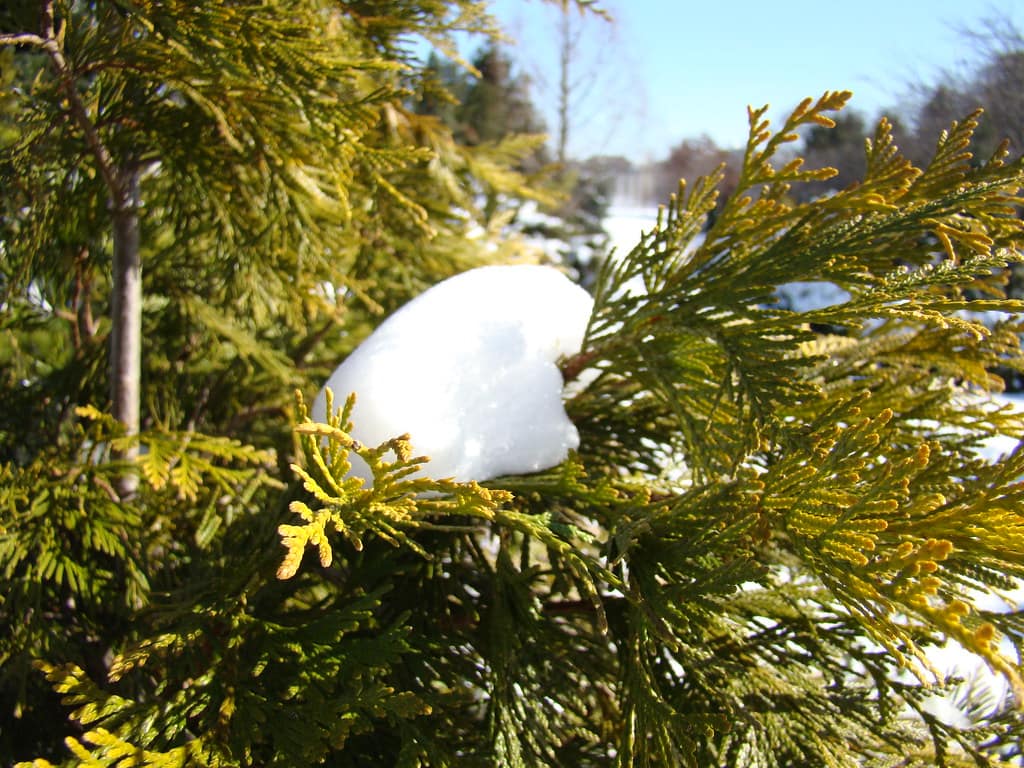
Neither cedar makes a better sauna on the measurements. Western red cedar and eastern white cedar weigh almost the same, both resist decay, and the published figures for how fast they carry heat differ by less than the reference's own margin of error. What differs is the colour, red to brown against a light tan, and where the trees grew: red cedar in British Columbia, white cedar from Manitoba east to Nova Scotia. We'd choose the maker and the price first and let the wood follow.
The two cedars side by side
The figures come from the Wood Handbook, the US Forest Products Laboratory's reference on wood properties, and they're measured on small clear samples. Real boards vary, but the comparison holds.
| Property | Western red cedar | Eastern white cedar | Source |
|---|---|---|---|
| Where it grows in Canada | BC coast and the wetter interior | Nova Scotia to Manitoba | NRCan, Silvics of North America |
| Heartwood colour | Pinkish or reddish-brown to deep brown | Light brown | NRCan |
| Specific gravity at 12% moisture | 0.32 | 0.31 | Wood Handbook, Table 5–3 |
| Side hardness at 12% moisture | 1,600 N (350 lbf) | 1,400 N (320 lbf) | Wood Handbook, Table 5–3 |
| Volumetric shrinkage, green to oven-dry | 6.8% | 7.2% | Wood Handbook, Table 4–3 |
| Heat conductivity at 12% moisture | 0.10 W/m·K | 0.094 W/m·K | Wood Handbook, Table 4–7, calculated |
| Heartwood decay resistance | Resistant | Resistant | Wood Handbook, Table 14–1 |
Read Oct 11, 2026. The Wood Handbook (FPL-GTR-282, 2021) calculates conductivity from specific gravity and says real values may vary as much as 20%. For comparison, it gives spruce 0.11 W/m·K.
Where each cedar grows
Western red cedar grows from sea level up to about 2,000 m in the coastal forests and wetter interior of British Columbia, Natural Resources Canada says. It's the cedar behind most of the barrels built in BC and Alberta.
Eastern white cedar runs from the Atlantic coast in Nova Scotia west to Manitoba, according to Silvics of North America, and Ontario calls it common across the province. LeisureCraft builds its Canadian Timber saunas from white cedar sourced from Ontario mills, by its own account, which makes white cedar the way to keep an Ontario sauna Ontario-grown.
On paper, the two woods are nearly the same
Red cedar's a touch denser and a little harder, and white cedar shrinks a touch more as it dries. The gaps run to a few percent, which you won't notice on a bench.
Heat is the figure people ask about, since a wood that conducts heat slowly passes less of it into your skin when you sit down. The handbook's figures put white cedar slightly lower, but it calculates them from density and warns that real boards can differ by a fifth. Both woods sit below spruce on that scale, and in a sauna we'd call the two cedars a tie.
Both heartwoods resist decay
The Wood Handbook's decay table rates the heartwood of both cedars as resistant, one step below its top class. Chemicals in the wood called thujaplicins get much of the credit, though FPInnovations researchers note that in red cedar they deplete over time in service.
Outdoors, that means a cedar sauna still benefits from a roof and some care. Nootka, for one, says sealing is optional and that sun and weather will fade the wood's colour without it.
Colour is the difference you'll see
Natural Resources Canada describes red cedar heartwood as pinkish or reddish-brown to deep brown and white cedar heartwood as light brown. Inside a sauna, red cedar reads warmer and darker, and white cedar paler and more even. Neither keeps its colour forever outdoors, so a barrel's outside is going to change either way.
Wear a mask when you cut either one
Cedar dust can cause occupational asthma. In red cedar it's linked to plicatic acid, and a 1994 medical review put asthma at up to 13.5% of exposed workers, and CCOHS lists a tighter exposure limit for red cedar dust than for most woods. White cedar contains the same compound at about half the level, and a study of a Quebec white cedar shingle mill found a similar asthma rate.
Those studies looked at dust in mills and shops, and we found nothing either way on a finished, heated room. If you're assembling a kit and cutting or sanding boards, wear a proper dust mask and work outside.
Which Canadian makers use which cedar
Most Canadian makers build in western red cedar. Nootka, Forest Cooperage and Copperwood say theirs is Canadian or from BC, and LeisureCraft's own red-cedar lines use BC wood too. Eastern white cedar shows up mainly in LeisureCraft's Canadian Timber line, and True North lets you choose either for the same models.
We couldn't find a maker that prices the same model in both woods side by side, so we can't tell you which costs more.
Where to buy
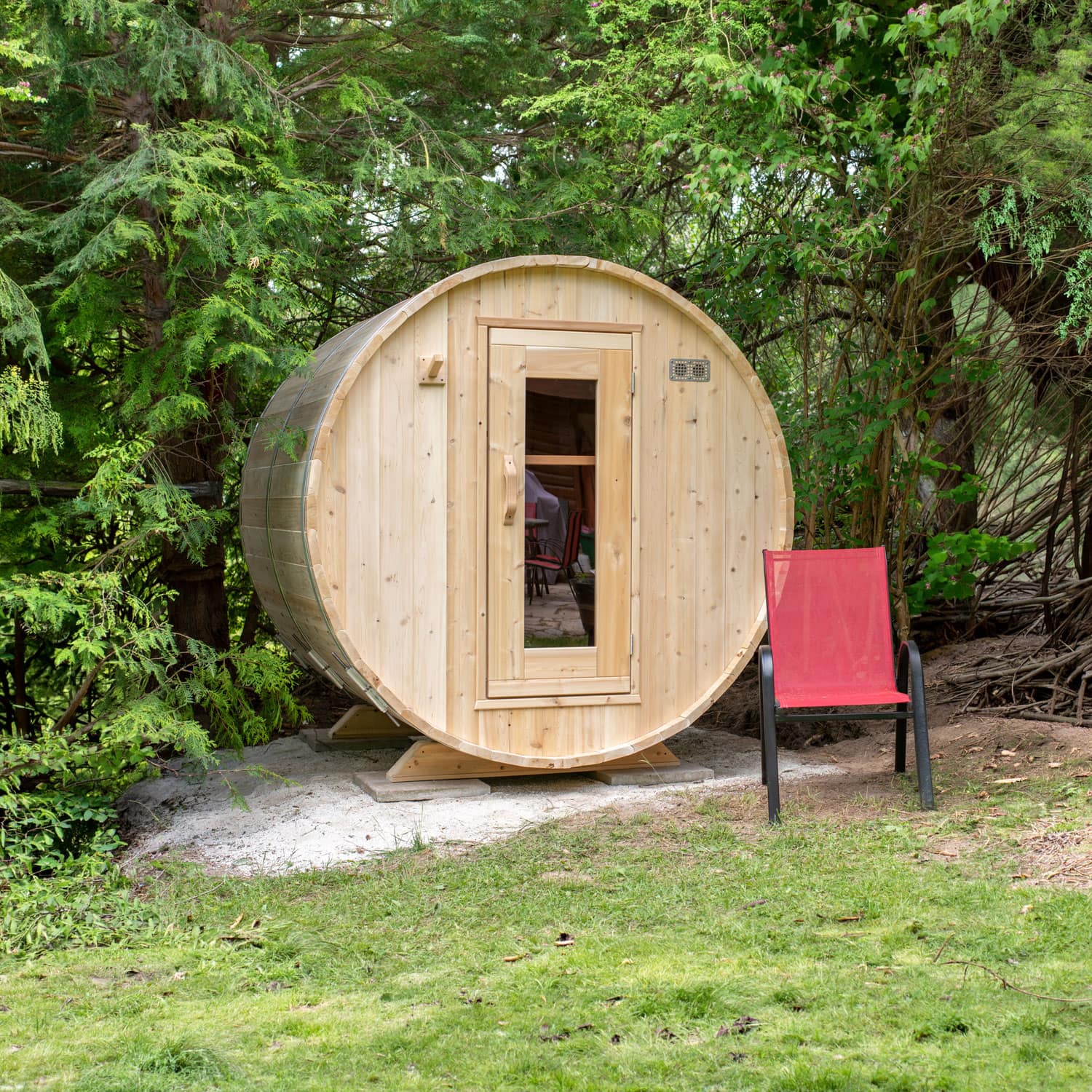
LeisureCraft Outdoor Saunas
LeisureCraft Canadian Timber Harmony Barrel Sauna CTC22W
Built in Melancthon, Ontario

True North Saunas Outdoor Saunas
True North Barrel Sauna
Built in Owen Sound, Ontario
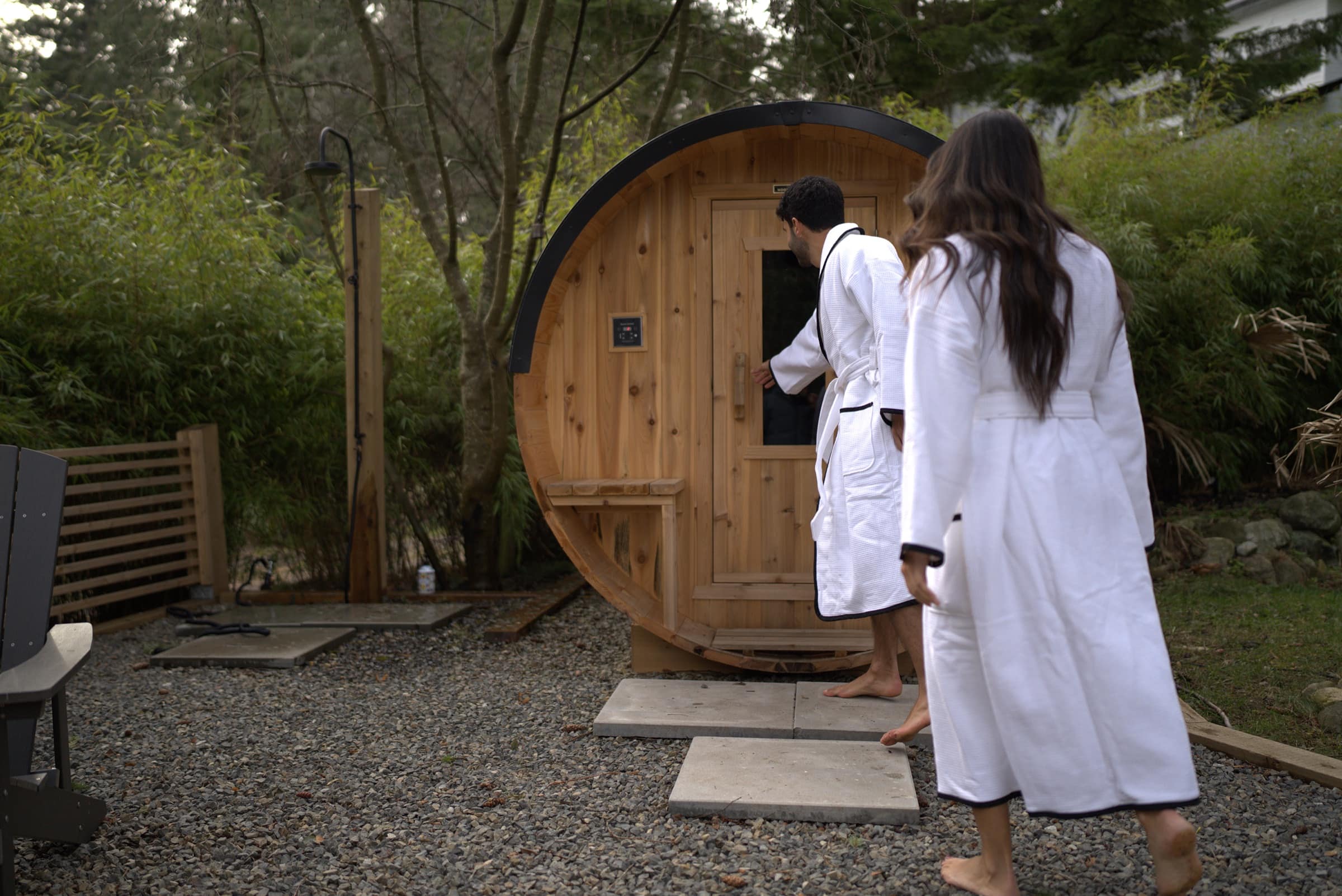
Nootka Saunas Outdoor Saunas
Nootka 8ft Barrel Sauna
Built in Squamish, British Columbia · with imported parts
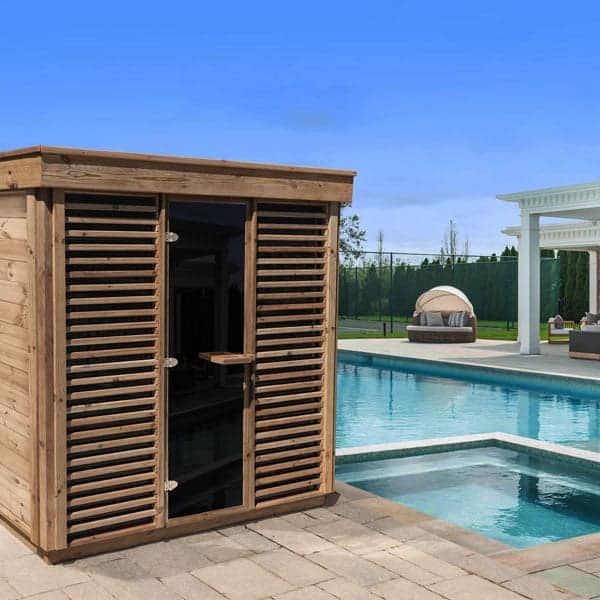
Dundalk LeisureCraft Outdoor Saunas
LeisureCraft Pure Cube CU572 Outdoor Sauna
Built in Melancthon, Ontario
Clear or knotty is a bigger choice than red or white
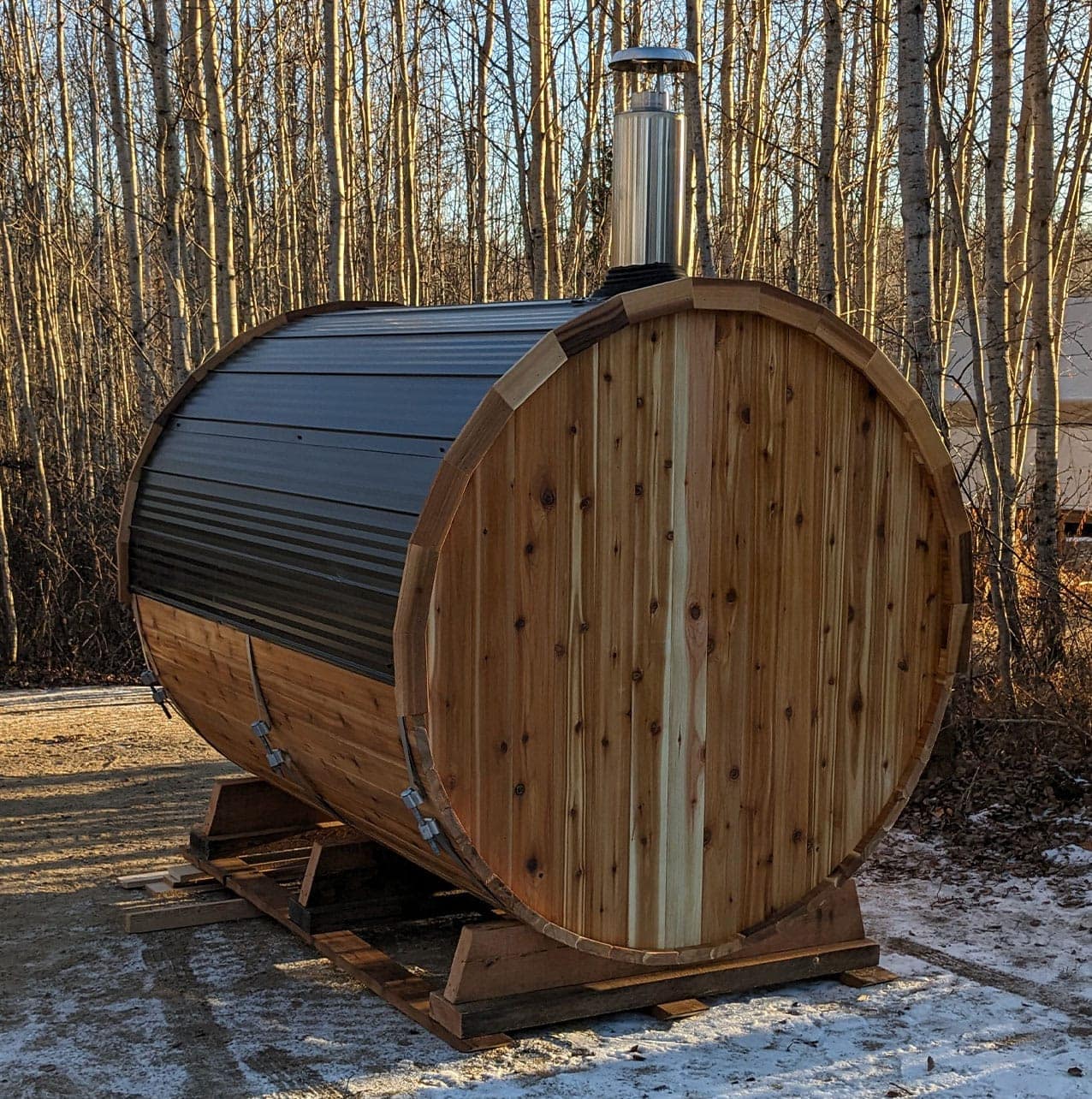
Cedar comes in grades, and the Western Red Cedar Lumber Association, an industry group, lists clear grades with few or no knots and knotty grades where the knots are sound and tight. Forest Cooperage builds in clear red cedar, Nootka in select tight-knot, and Copperwood uses tight-knot walls with clear benches and floors.
Clear wood looks cleaner and plainer. Knotty wood has more character, and in a tight-knot grade the knots are sound and tight, the association says. Ask which grade a quote includes, because it'll change the look of the room more than the species does.
Where to buy

Forest Cooperage Outdoor Saunas
Forest Cooperage Cedar Barrel Sauna
Built in Sooke, British Columbia · with imported parts
Copperwood Sauna Outdoor Saunas
Copperwood 8ft Round Barrel Sauna
Built in Spruce Grove, Alberta
How did we compare them?
We read the US Forest Products Laboratory's Wood Handbook (2021), Natural Resources Canada's tree factsheets, Silvics of North America, the Ontario and Quebec forestry pages, CCOHS and WorkSafeBC on wood dust, and published studies on cedar extractives and cedar asthma, all on Oct 11, 2026. No government or peer-reviewed source we found compares the cedars as sauna woods, so the sauna conclusions here are ours, drawn from those measurements. The makers' wood sources come from their own pages, linked on each product page.
Common questions
- Is western red cedar or eastern white cedar better for a sauna?
- Neither one wins. The Wood Handbook gives western red cedar and eastern white cedar nearly the same density and heat conductivity and rates both heartwoods as resistant to decay. Western red cedar is darker and reddish, and eastern white cedar is light brown.
- Where does eastern white cedar grow?
- Eastern white cedar grows from Nova Scotia west to Manitoba, according to Silvics of North America, and Ontario describes it as common throughout the province. LeisureCraft builds its Canadian Timber saunas from eastern white cedar sourced in Ontario, according to LeisureCraft.
- Is cedar dust dangerous?
- Yes, cedar dust can cause occupational asthma. Western red cedar dust is linked to plicatic acid, and eastern white cedar contains the same compound at about half the level. Wear a dust mask when cutting or sanding either wood.
- Does eastern white cedar rot?
- Eastern white cedar heartwood resists decay, and the Wood Handbook places it in the same resistant class as western red cedar. Outdoors it still benefits from a roof and occasional care.
We review from makers’ documentation, owner reports and published research. How we choose products and write reviews.